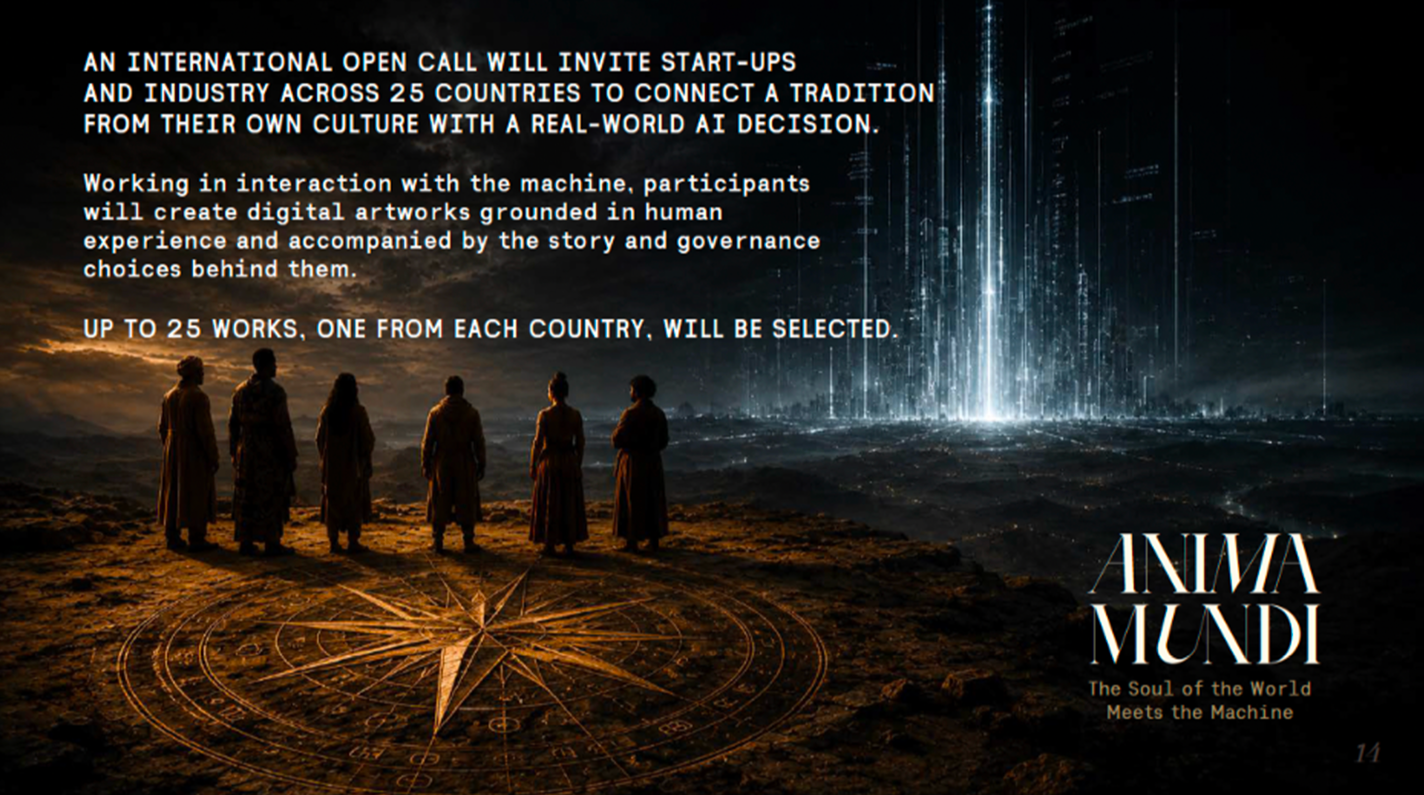
This is a call to start-ups and industry working in communities to bring the mythologies, cosmologies, and living traditions of their own cultures forward as guides of the machines — and to show, in art that crosses every border, what responsible AI can look like.
Over the year since the AI Hub for Sustainable Development launched, we have watched — and taken part in — the decisions AI start-up founders and industries are making, from agriculture to education, from language and voice technology to data centers. Often these start-ups and private-sector actors are guided by something deeper than a business case: a humanity that draws on their own culture and refines the discipline of questioning.
This initiative is our attempt to widen the space for that dialogue — between communities and the machines being built — so it can come fully alive, as a way to disarm AI and guide its governance.
Start your Submission
Inspired by Pope Leo XIV’s Magnifica Humanitas
In May 2026, the encyclical named the central moral question of the AI era through two biblical images:
The Tower of Babel — technology built on pride, efficiency, and the erasure of difference. A project without God, which ended in dispersion, confusion, and loss of common language. And the rebuilding of Jerusalem under Nehemiah — shared reconstruction, community-led, each family assigned their section of the wall, no one left behind. Diversity transformed into a resource.
And every culture on earth has its own stories about power and care, domination and dignity, the hunger that destroys and the hands that heal. This call asks AI start-ups and builders of human interest AI interacting with frontier AI Labs from each of the 25 countries in the G7 and 18 Africa-Italy Mattei Plan countries to find those stories — and use them to illuminate the AI decisions being made right now, in hospitals and fields, in data centers and parliaments, in voice agents advising farmers and algorithms deciding who gets credit.
All other countries are also welcome to participate in creating a global key of wisdom where consequential AI decisions are being made, to help all of us steer the relationship of humanity with AI.
THE AI

MORAL
QUESTION.
The Tower of Babel, technology built on pride, efficiency and the erasure of difference. A project that ended in dispersion, confusion and loss of common language.

The rebuilding of Jerusalem under Nehemiah, shared reconstruction, community-led, no one left behind. Diversity transformed into a resource.

Every culture has its stories of power and care, domination and dignity. Anima Mundi brings these stories into dialogue with the AI decisions being made today.
Power and care.
Domination and dignity.
The central opposition
The Central Opposition
The Babel impulse
what we are fighting against
Efficiency prioritised over human dignity
Data extracted from communities without consent or return
Languages and cultures flattened to English and Western norms
Opaque algorithmic decisions with no right of appeal
Infrastructure owned by the few, inaccessible to the many
AI deployed as an instrument of surveillance and control
Autonomous weapons that remove human accountability from lethal force
The Jerusalem impulse
what we are building toward
Communities rebuilding their own walls, on their own terms
Voice AI speaking every mother tongue, reaching every farmer
The human always in the decision — the machine as tool, not judge
Data governed and hosted where it is created
Infrastructure locally owned and locally maintained
Technology designed specifically for those the market has excluded
AI as an instrument of care, not extraction
Anima mundi — the soul of the world
Anima mundiis Latin for 'the soul of the world' — the ancient conviction that the world is not dead material or a single ingredient, but a living potluck, relational whole: alive, connected, and humanistic. Every participating entity — countries, individuals, start-ups, young people — carries its own answer to it: vital force, ancestral presence, the spirit that lives in rivers, tools, dance, music and speech.

It is also a living institution. In 1925, a Universal Exposition led by the Vatican brought some one hundred thousand works to Rome from every part of the world, and a permanent ethnological collection grew from it. In 2019, the Vatican reopened that collection under a new name —Anima Mundi— describing it as a living home with its doors wide open to the peoples of the entire world, and setting it on a deliberate path of reconnection: collaboration with the communities from which its works came, so that the objects are treated not as a dead reality but as the potluck of living spirit of a culture expressed through its art.

This call stands in that same spirit and extends it to the newest thing in the world. Traditions that have judged power and care, extraction and reciprocity, for thousands of years are ever present in start-ups and builders of human interest AI in communities interacting with frontier AI Labs — surfacing creativity and new ideas to steer the machine, and to illustrate AI decisions and guide them with wisdom.
THE LIBRARY.‍
THE KEY.
Every contribution becomes part of a permanent, open digital library: a global commons of cultural knowledge, lived experience and testimony on AI.

The selected works extend that conversation into exhibitions and international dialogue.

Anima Mundi is designed not only to produce artworks, but to create a resource for the future.
A library of voices.
A key for better questions.
The Library
the permanent record
Every submission received, from every country, in every medium, is preserved in a permanent, open, online archive. Each entry holds three things together: the myth, the specific live AI decision it was set beside, and the submitter's own account of why. Organised over time by country, by mythology, and by the AI decisions submissions anchor to, the Library becomes a working reference — a place a policymaker, an engineer, a community leader, or a researcher can go to ask, "what has one culture's tradition already said about exactly this kind of decision?" and find an answer in the words and images of the people who hold that tradition. Nothing in the Library is edited into consensus. Each submission produces practices that will be curated in the library — the residue of hard-won decisions, already tested against real constraints, which become a library of harmonic practices that makes something a system instead of just stories.
The Key
what the Library makes possible but does not, on its own, supply

The Key is the interpretive work of reading across hundreds of traditions and hundreds of real AI decisions to surface the questions, warnings, and permissions that keep recurring no matter which mythology is speaking. A key does not destroy and does not fight; it opens, protects, and allows passage — a deliberately different register from a weapon laid down. The Key to disarming AI is not a single rulebook or checklist. It is the set of questions, drawn from the wisdom gathered in the Library and tested against real decisions made by real start-ups in real communities, that anyone building, financing, or governing AI should have to sit with before they act. The Dialogue Sessions are where this synthesis happens in public: practitioners, artists, and researchers reading the Library's contents against live cases, together, out loud, so the Key is drawn from the Library rather than imposed on it. What results is not a verdict on any one piece of technology, but a discipline of asking — carried into the rooms, boardrooms, and parliaments where AI decisions are actually made.
The distinction between the Library and the Key is an architectural choice: keeping the non-hierarchized archive separate from the transversal interpretative work avoids both the museum and the code of conduct, and instead produces a discipline of questioning. This is precisely what's missing from governance tables today, crowded with checklists and lacking in profound and meaningful questions.
This call is for everyone building and deploying AI with and in communities
What is required is lived experience of AI, and something to say about what should guide it. We are looking for examples that illustrate the real dialogue between the people in communities and the people who build and deploy AI.

If an algorithm has scored your loan, shaped your child's feed, advised your farm, translated your language, or second-guessed your judgment at work, you already hold the expertise this call is built on. Tell us what works for its governance. Tell us what should guide it. The description is the heart of the submission.

Every submission is valued. All works received will be preserved in a permanent, open online library — a global commons of tradition and testimony on AI, accessible to the world.

There is a reason the invitation is this wide. Government has an essential role to play in building public trust in AI — but it cannot do this alone. As AI capabilities continue to advance, industry building tools and solutions for people and communities must be a core partner in AI safety and security: it is an industry that is intimately aware of the state, scope, and trajectory of AI development, in a way no government yet is. But industry and government together are still not enough — because neither can supply what only communities hold: the moral traditions, tested over millennia, that say what power owes to the people it touches.

In line with the spirit ofAnima Mundi— a collection begun in 1925 and renamed in 2019 as an act of reconnection — we believe the world's mythologies can guide the governance of AI, and that the people who carry those traditions belong at the table where AI is judged. Your tradition, told through your eyes, made with the tools of this era: that is a submission.
Government builds trust. 

Industry knows the trajectory.

Communities hold the compass.
This call is where the three meet.
Start your Submission
NO
SINGLE
ANSWER.
Anima Mundi brings together communities from the 18 African partner countries of the Mattei Plan and the G7 nations.

Each culture enters the conversation through its own stories, traditions and ways of understanding power and responsibility.

Not to find one universal answer, but to create a genuinely global dialogue about responsible AI.
25 traditions.
One moral question.
No single answer.
Open for all; priority for 25 countries in the G7 and Mattei partners
While we welcome submissions from all over the world, we are also specifically inviting the 18 Mattei Plan partner countries in Africa and the G7 nations of the AI Hub for Sustainable Development.

We specifically invite young people: the engineers, designers, researchers, and founders who are making the systems this call examines. The mythologies below are examples, not assignments — submitters may propose any frame, any story, any experience from within their own tradition.
North Africa
Tunisia
Tanit — goddess of Carthage, of protection and fertility
What does a goddess of protection owe a people whose data has been taken?
Morocco
Aisha Qandisha — the river spirit who lures and entraps
The platform that connects with convenience but traps with dependency.
Egypt
Thoth — god of knowledge, writing, and scribes
Whose calendar does AI run on? Whose seasons does it not know?
Algeria
Yennayer & the Amazigh new year
Whose calendar does AI run on? Whose seasons does it not know?
East Africa
Tanzania
Liongo Fumo — the hero-poet whose power was hidden in a secret
AI whose power source is opaque — and the community that must live with it.
Rwanda
Imana — the supreme creator present in all daily acts
If God is in every act, where is God in the algorithm?
Mozambique
Mwari — sky god who speaks through chosen intermediaries
The model that speaks for communities it has never heard.
Kenya
Ngai on Mount Kenya — approached only through collective ceremony
AI governance as communal ritual vs. private corporate decision.
Ethiopia
The Queen of Sheba's journey to seek wisdom
Knowledge sought at great cost — what is returned to those who made the journey?
West Africa
Senegal
Mame Coumba Bang — river spirit who demands respect
Data extracted from a river community that was never asked.
Mauritania
The griot as keeper of living, spoken memory
When AI replaces the griot, whose memory survives?
Ghana
Sankofa — the bird that looks back to move forward
AI trained on colonial archives. What past is it learning from?
Côte d’Ivoire
Anansi the spider — cunning weaver of webs
The platform that connects everything — and owns the web.
Central Africa
Gabon
Bwiti initiation — death and rebirth, threshold knowledge
The AI threshold: what is lost in the crossing, what is transformed?
DR Congo
Nkisi — sacred objects imbued with protective spiritual power
What would it mean to build AI with protective spirit, not extractive logic?
Republic of Congo
Nzambi Mpungu — the supreme force in all living things
AI that extracts from a forest people without seeing what it takes.
Southern Africa
Zambia
Leza — the high god who gives and takes without explanation
The credit score. The moderation decision. The ruling with no appeal.
Angola
Ngana Kisimb[i] — water spirit, bearer of hidden wealth
Oil and data — two forms of resource extracted from below the surface.
G7 Nations
Japan
Amaterasu in the cave — the sun withheld until community rejoices
What happens to communities when AI replaces human connection?
Canada
Windigo — spirit of insatiable hunger that consumes everything
Compute hunger, data hunger, energy hunger — the AI that is never full.
United States
Coyote / Raven — the Trickster who disrupts to reveal truth
Silicon Valley disruption — who is the trickster really serving?
United Kingdom
Frankenstein's creature — the made thing that exceeds its maker
Alignment: can the creator remain responsible for what the model becomes?
Germany
Faust — knowledge purchased at ultimate cost
The AI pact: capability and convenience in exchange for what, exactly?
France
Marianne & the republic of reason
When the republic’s values meet the algorithm — who wins?
Italy
Prometheus unbound — fire stolen for humanity
Compute as stolen fire. Who bears the gift, who bears the punishment?
North Africa
Tunisia
Tanit — goddess of Carthage, of protection and fertility
What does a goddess of protection owe a people whose data has been taken?
Morocco
Aisha Qandisha — the river spirit who lures and entraps
The platform that connects with convenience but traps with dependency.
Egypt
Thoth — god of knowledge, writing, and scribes
Whose calendar does AI run on? Whose seasons does it not know?
Algeria
Yennayer & the Amazigh new year
Whose calendar does AI run on? Whose seasons does it not know?
East Africa
Tanzania
Liongo Fumo — the hero-poet whose power was hidden in a secret
AI whose power source is opaque — and the community that must live with it.
Rwanda
Imana — the supreme creator present in all daily acts
If God is in every act, where is God in the algorithm?
Mozambique
Mwari — sky god who speaks through chosen intermediaries
The model that speaks for communities it has never heard.
Kenya
Ngai on Mount Kenya — approached only through collective ceremony
AI governance as communal ritual vs. private corporate decision.
Ethiopia
The Queen of Sheba's journey to seek wisdom
Knowledge sought at great cost — what is returned to those who made the journey?
West Africa
Senegal
Mame Coumba Bang — river spirit who demands respect
Data extracted from a river community that was never asked.
Mauritania
The griot as keeper of living, spoken memory
When AI replaces the griot, whose memory survives?
Ghana
Sankofa — the bird that looks back to move forward
AI trained on colonial archives. What past is it learning from?
Côte d’Ivoire
Anansi the spider — cunning weaver of webs
The platform that connects everything — and owns the web.
Central Africa
Gabon
Bwiti initiation — death and rebirth, threshold knowledge
The AI threshold: what is lost in the crossing, what is transformed?
DR Congo
Nkisi — sacred objects imbued with protective spiritual power
What would it mean to build AI with protective spirit, not extractive logic?
Republic of Congo
Nzambi Mpungu — the supreme force in all living things
AI that extracts from a forest people without seeing what it takes.
Southern Africa
Zambia
Leza — the high god who gives and takes without explanation
The credit score. The moderation decision. The ruling with no appeal.
Angola
Ngana Kisimb[i] — water spirit, bearer of hidden wealth
Oil and data — two forms of resource extracted from below the surface.
G7 Nations
Japan
Amaterasu in the cave — the sun withheld until community rejoices
What happens to communities when AI replaces human connection?
Canada
Windigo — spirit of insatiable hunger that consumes everything
Compute hunger, data hunger, energy hunger — the AI that is never full.
United States
Coyote / Raven — the Trickster who disrupts to reveal truth
Silicon Valley disruption — who is the trickster really serving?
United Kingdom
Frankenstein's creature — the made thing that exceeds its maker
Alignment: can the creator remain responsible for what the model becomes?
Germany
Faust — knowledge purchased at ultimate cost
The AI pact: capability and convenience in exchange for what, exactly?
France
Marianne & the republic of reason
When the republic’s values meet the algorithm — who wins?
Italy
Prometheus unbound — fire stolen for humanity
Compute as stolen fire. Who bears the gift, who bears the punishment?
The six AI decisions submissions can anchor to
Every submission connects its mythological frame to one of the following concrete, real-world AI moments on trust and safety in the private sector. Submitters may propose an alternative with justification.

These six moments are not thought experiments. Each submission must anchor its chosen moment to a live, named instance: an actual start-up or private-sector team, in actual relationship with an actual community, making this kind of decision in the world right now. The description should name who built the system, who it serves, what the community pushed back on or asked for, and how the decision was actually reached inside that team's process — not a generic scenario, but a real case with a name attached.
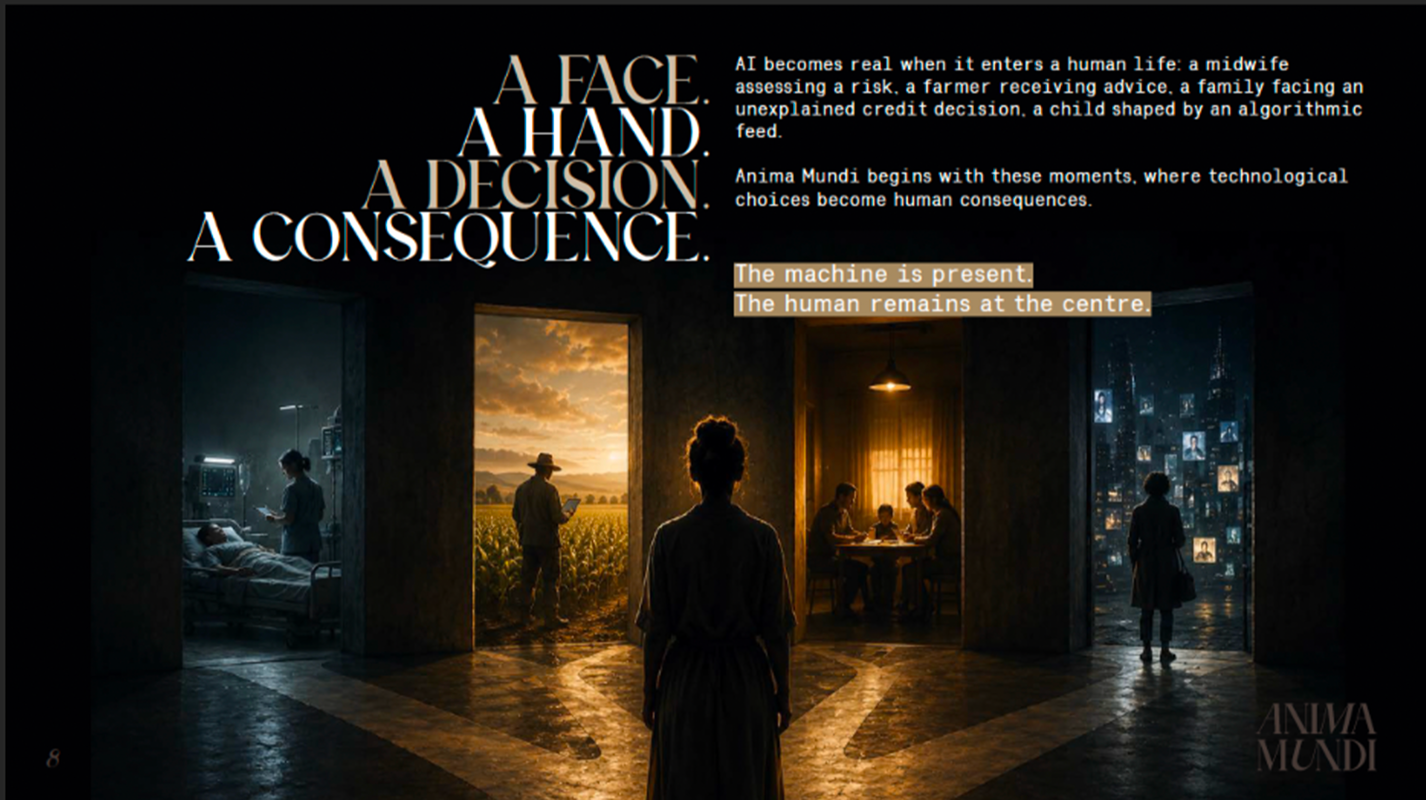
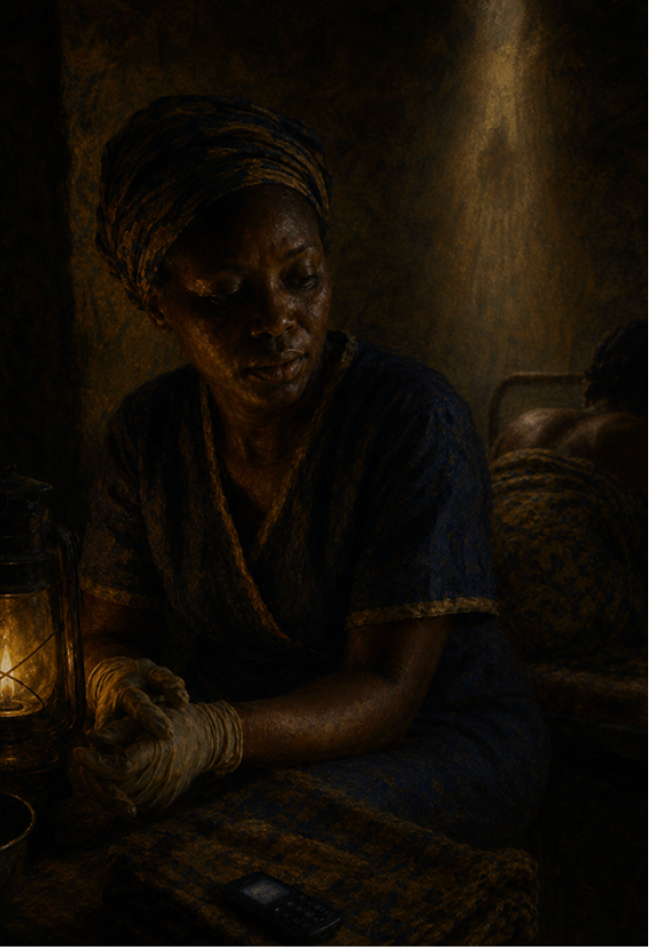
1. The midwife and the machine
An on-device AI clinical tool flags eclampsia risk during a complicated rural delivery. No internet connection. The midwife investigates, overrides the flag on evidence, and makes the call. The mother delivers safely. Whose myth names the threshold between human judgment and machine suggestion?
2. The farmer and the voice
A voice agent advises 5,000 farmers in their own language, offline, 24 hours a day. A single extension officer cannot. What spirit speaks through the machine — and is it invited or intrusive?
3. The data that crossed the ocean
African words, stories, and health records flow into models trained elsewhere, owned by others. The knowledge returns as a product the community cannot afford. Which myth names this — tribute, theft, or gift?
4. The algorithm and the loan
A credit score is generated. No one can explain it. A family is excluded from the financial system. Technically legal, structurally unjust. What does your mythology call the force that decides who belongs and who does not?
5. The healer and the diagnosis
A rural health worker receives an AI-generated clinical recommendation. The model was trained on data from a different continent, a different body type, a different disease burden. The recommendation is confident. The worker is uncertain.What does your tradition say about the outsider who arrives with answers — and whose knowledge we are being asked to trust with our lives?
6. The child and the feed
A rural health worker receives an AI-generated clinical recommendation. The model was trained on data from a different continent, a different body type, a different disease burden. The recommendation is confident. The worker is uncertain. What does your tradition say about the outsider who arrives with answers — and whose knowledge we are being asked to trust with our lives?
What a submission holds
In the art or image
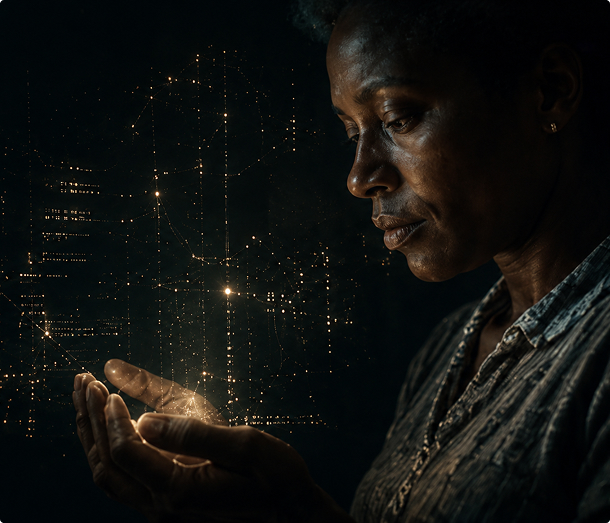
A person and what they encountered or received from the AI system is the right frame for the image itself, and every image should hold to it: a face, a hand, a decision, a consequence.

But if the accompanying description follows that same frame, we lose exactly what this call is meant to surface. A submission that only tells us what happened when the tool met the user gives us a human-in-the-loop story — valuable, but incomplete. It tells us nothing about the governance decisions the company or implementer made in designing or deploying that interaction.
In the write-up
The written description is where that governance layer belongs. Alongside the myth and the AI moment, name:
  1. What choices were made in designing or deploying the interaction shown.
  2. Why it was made that way — feedback from health workers, internal safety practice, regulation.
  3. Who was involved in making it — community partners, health ministry, product team.
  4. How it was later reviewed, overseen, or fed back into the system.
  5. How you see these choices through the myth — what the tradition makes you notice, what new questions it raises, what it carries forward.
For review — coding submissions. To code cases consistently before comparing across them, we read each write-up through three questions: actors — who was involved, participating, or accountable; assets — what was actually being governed; actions — what was done, allowed, constrained, overridden, or left undecided, and how local wisdom guides us.A person and what they encountered or received from the AI system is the right frame for the image itself, and every image should hold to it: a face, a hand, a decision, a consequence.

Guides from builders of ecosystems
The opening illustrations from Italy, Rwanda, Morocco, and East Africa
This call launches alongside five live examples (forthcoming) from partners of the AI Hub for Sustainable Development — real start-ups and industrial partners already making the kinds of decisions this call asks submissions to illuminate, already working directly with the communities those decisions affect. They are offered not as answers but as guides, as the discipline of questioning. Submitters are warmly encouraged, though not required, to draw on these five, or to find their own live example among the start-ups and communities of their own country.
The great transitional challenges of our era (and with them, in particular, the challenges related to AI) are, unfortunately, dangerously and culpably lacking in that primordial wisdom that unites philosophical, spiritual, theological, moral, cultural, sociological, and anthropological traditions. In this era, we are losing our anchor to our ontological foundations. Nothing but harm can come of this. Our work can and must propose a different vision. As we've already said, we have a great responsibility.
Francesco Cicione, Founder, Harmonic Innovation Paradigm, South of Italy
Harmonic Innovation Group
Lorem ipsum
View More
Crane AI Labs (forthcoming)
Lorem ipsum
View More
Art Centrica (forthcoming)
Lorem ipsum
View More
Horus Labs (forthcoming)
Lorem ipsum
View More
DeepLeaf
(forthcoming)
Lorem ipsum
View More